
Indian Toradar matchlock musket, probably 19th c., calibre 16 mm, round barrel with muzzle swell
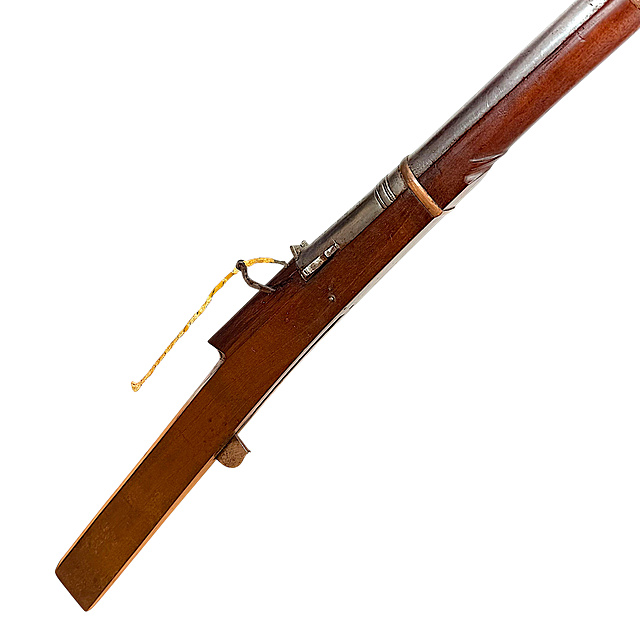
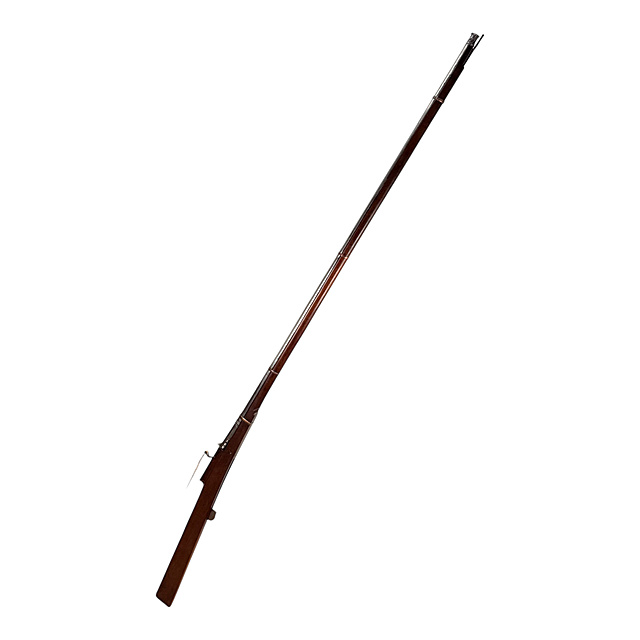
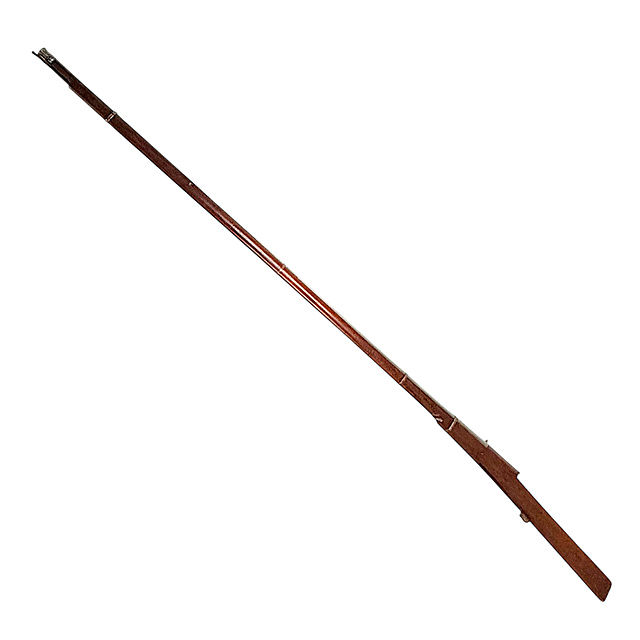
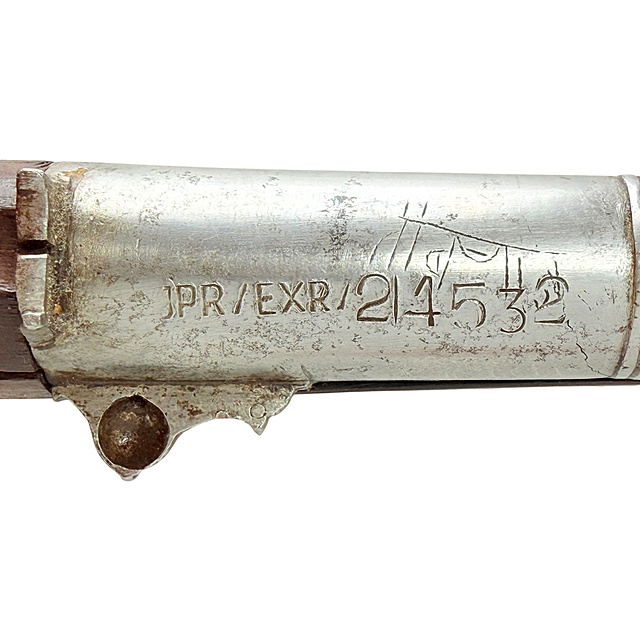
Iron, wood and copper-coloured metal, Indian matchlock musket (Toradar), muzzleloader, probably 19th century, calibre 16 mm. Very long, slender round barrel with tulip-shaped flared muzzle swell engraved with grooves, raised rings and rear sight at the breech, the barrel held to the stock by several metal bands, among them a copper-coloured band at the breech, on the barrel the stamping "JPR/EXR/214532" and two further, poorly struck, illegible marks. Narrow, straight full stock with straight butt, assembled from several parts, the upper part with the barrel bed inset into the stock, ramrod beneath the barrel, pan on the side with sliding cover, hook-shaped match holder with remnant of a yellow match, trigger lever on the underside of the stock. Mechanism working, scratches on the stock. Please inspect. L. 175 cm
The Toradar is the Indian form of the matchlock musket, which was made in northern and central India from the 16th into the 19th century and carried as a common firearm until circa 1830. Its matchlock works on the oldest ignition principle of handheld firearms: when the trigger is pulled, the match holder lowers the smouldering match onto the priming powder in the side pan. In Europe, this system was in use only into the 17th century, whereas in India it remained the norm for far longer. The long, slender barrel with flared muzzle and the straight, narrow stock distinguish the Toradar from the European muskets of its time.


Lot
Limit:
Your maximum bid: €
by telephone
When bidding by telephone, you will automatically bid the limit or the registered pre-bid (telephone bidding is only possible from €100). Only when the limit/pre-bid has been reached we will call you to bid further on. Your telephone bid will be treated as a written bid up to the registered pre-bid and will of course only be used to the extent necessary.
If you save your absentee bids on the bid list, you will be able to change or delete them until you submit them. If you do not submit your absentee bids, they will not be considered. They must be submitted before the auction starts.
You can submit your absentee bids now using the "Submit absentee bids directly" button, or later using the "List of Bids" menu item.


