
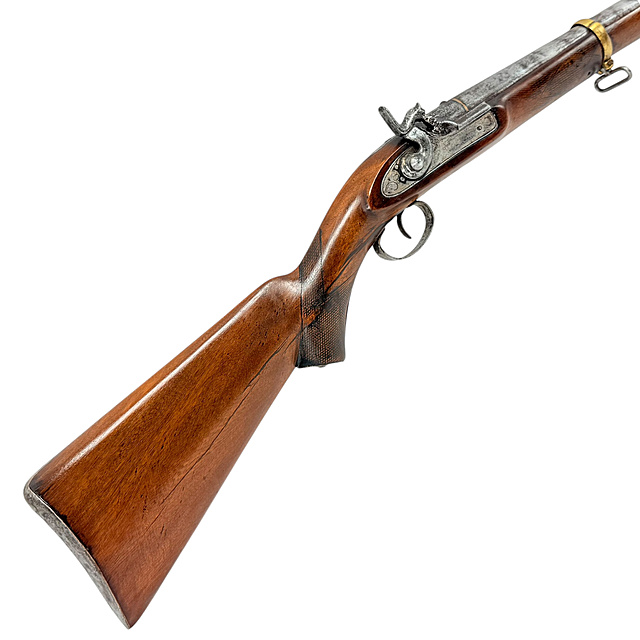
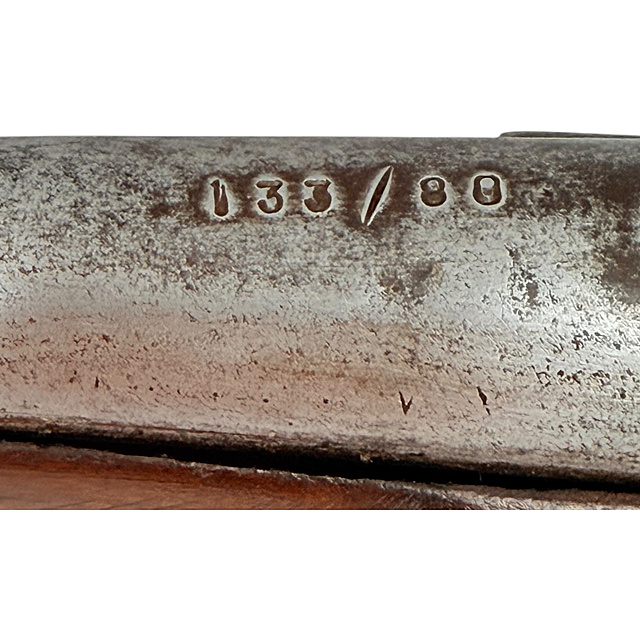
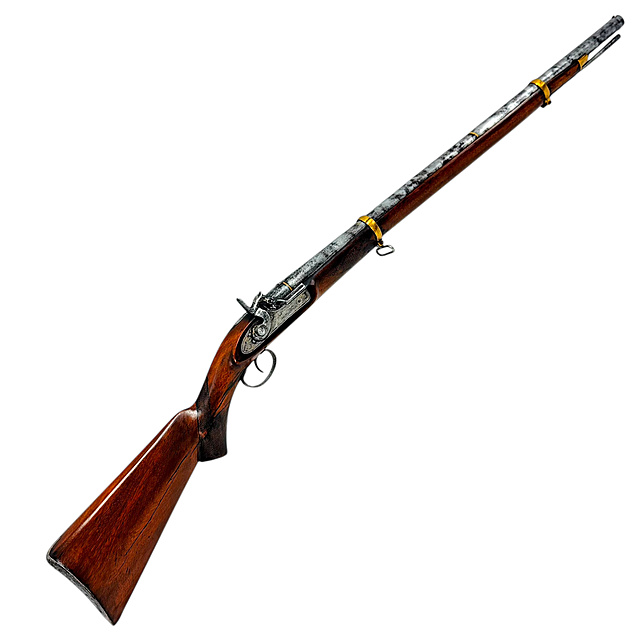
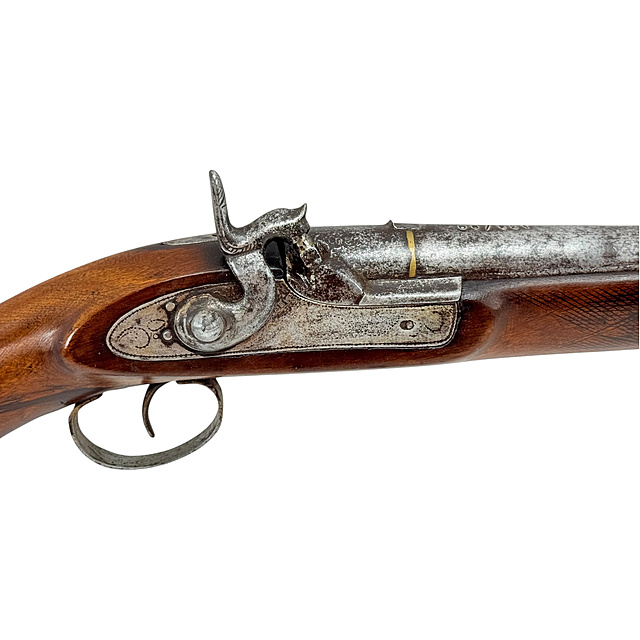
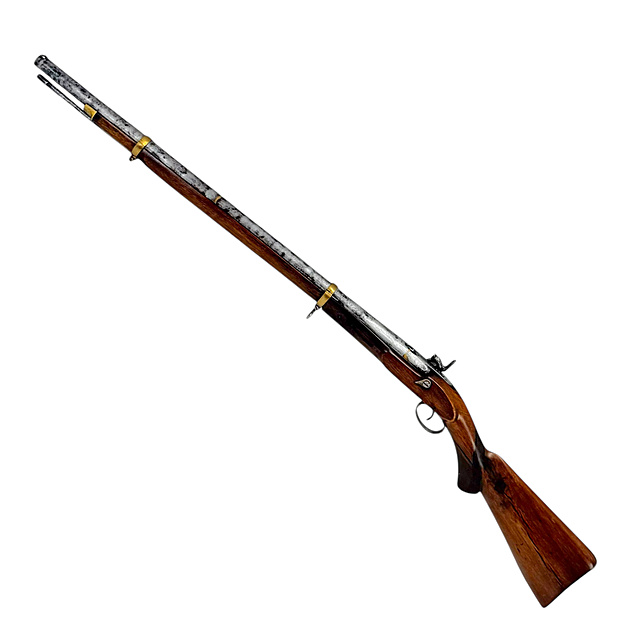
Percussion muzzle-loader, fully stocked, engraved lock, stamped number “133/80”, circa 1860
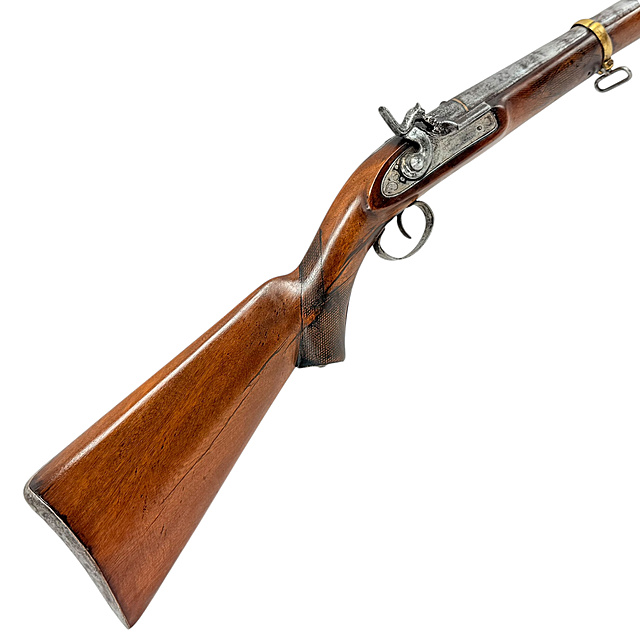
Gun in calibre 18 mm with barrel flat-sided at the breech, round towards the front, stamped there “133/80”, a narrow inlaid brass line at the base of the breech, opposite the lock a scratched, no longer legible combination of numbers and probably letters. Percussion lock (bar-action lock), lock plate with dot border and light scroll engraving, hammer engraved. Reddish-brown polished walnut full stock to just short of the muzzle, pistol grip chequered. Two flat brass barrel bands and brass fore-end cap, iron trigger guard with scrolled spur, iron sling swivels, ramrod present, rear sight missing, only its plate remaining. Age-appropriate condition, mechanism works, metal pitted over large areas and with whitish-grey marbling, engravings rubbed, wood with dark spots and a drying crack in the butt. Please inspect. L. 118 cm.
The bar-action lock, in German Vorderschloss, also called vorliegendes Schloss, is the classic form of the side lock: hammer and mainspring lie beside the barrel, the spring in front of the hammer on the lock bar. Lock plates with dot and line borders and scroll engraving on plate and hammer belong to the decoration of percussion hunting weapons of the 19th century, while the service guns of the period mostly had plain locks. The full stock with brass furniture and barrel bands follows the construction of the infantry guns of the percussion era, which replaced the flintlock muskets in Prussia and France from 1840. On firing, the hammer strikes the percussion cap placed on the nipple, whose flash ignites the powder charge in the barrel through the vent. Muzzle-loader exempt from licensing under German law, sale to persons aged 18 and over only.


Lot
Limit:
Your maximum bid: €
by telephone
When bidding by telephone, you will automatically bid the limit or the registered pre-bid (telephone bidding is only possible from €100). Only when the limit/pre-bid has been reached we will call you to bid further on. Your telephone bid will be treated as a written bid up to the registered pre-bid and will of course only be used to the extent necessary.
If you save your absentee bids on the bid list, you will be able to change or delete them until you submit them. If you do not submit your absentee bids, they will not be considered. They must be submitted before the auction starts.
You can submit your absentee bids now using the "Submit absentee bids directly" button, or later using the "List of Bids" menu item.


