
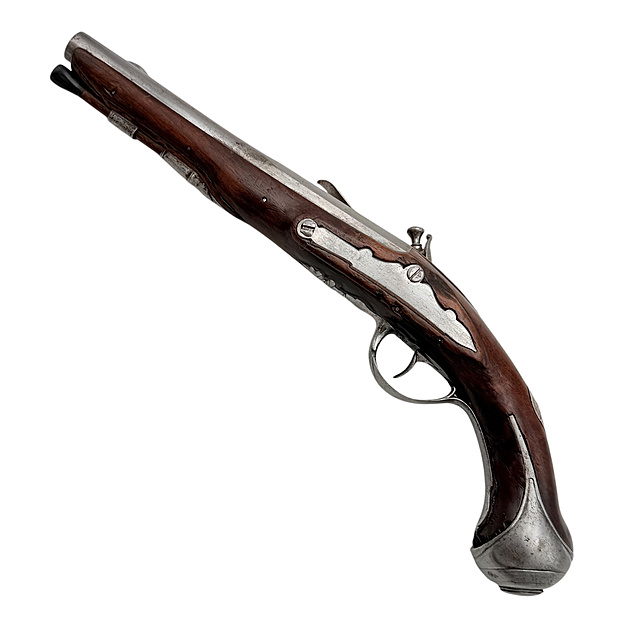
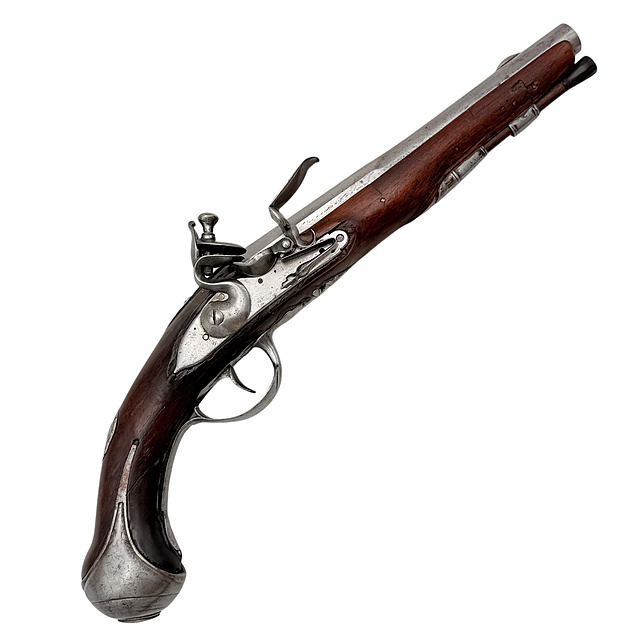
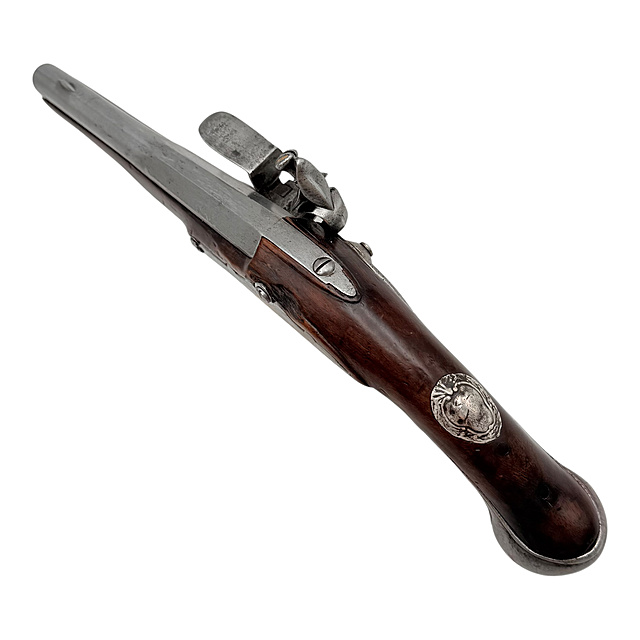
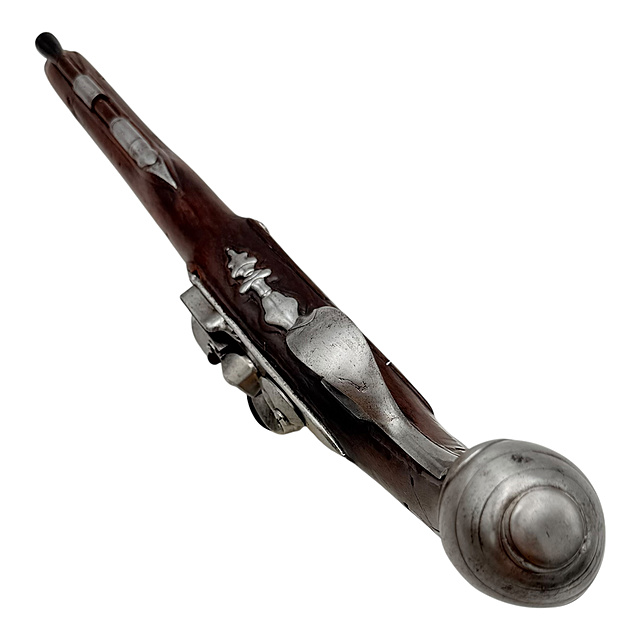
Flintlock pistol for officers with full walnut stock and silver-coloured escutcheon, 18th century
Flintlock pistol for an officer. Octagonal-to-round iron barrel (octagonal at the breech, then round), calibre 14 mm, without marks. Flintlock with flat lock plate, swan-neck cock and frizzen with frizzen spring. Full walnut stock with wooden ramrod in two iron ramrod pipes. On the back of the grip a silver-coloured escutcheon in the form of a rocaille cartouche with blank field. The mounts of iron: side plate, trigger guard with baluster finial and butt cap with long side spurs and flattened ball pommel. The mechanism sticks slightly, the fore-end with an old restored area and fine dry cracks, the metal with age patina. L. 34 cm.
From the 17th to the early 19th century the flintlock was the prevalent ignition system of hand firearms: a clamped flint produces the igniting spark when it strikes the frizzen. Short travelling pistols with iron mounts and ball pommel, whose escutcheon on the back of the grip could take the owner's initials or coat of arms, are common in continental Europe in the second half of the 18th century; officers procured such weapons privately. The rocaille, the shell-like scrollwork of the escutcheon, is the leading ornament of the Rococo. As a flintlock weapon of a model predating 1871, the pistol is exempt from licensing under the German Weapons Act and may only be sold to persons aged 18 and over.


Lot
Limit:
Your maximum bid: €
by telephone
When bidding by telephone, you will automatically bid the limit or the registered pre-bid (telephone bidding is only possible from €100). Only when the limit/pre-bid has been reached we will call you to bid further on. Your telephone bid will be treated as a written bid up to the registered pre-bid and will of course only be used to the extent necessary.
If you save your absentee bids on the bid list, you will be able to change or delete them until you submit them. If you do not submit your absentee bids, they will not be considered. They must be submitted before the auction starts.
You can submit your absentee bids now using the "Submit absentee bids directly" button, or later using the "List of Bids" menu item.


