
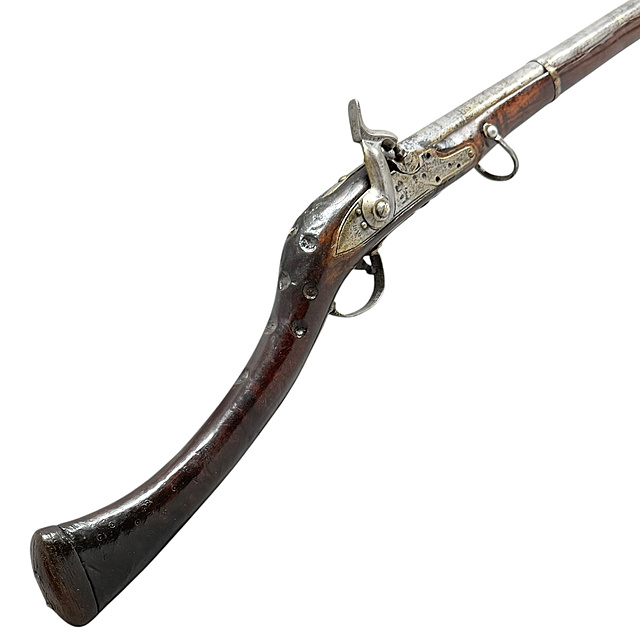
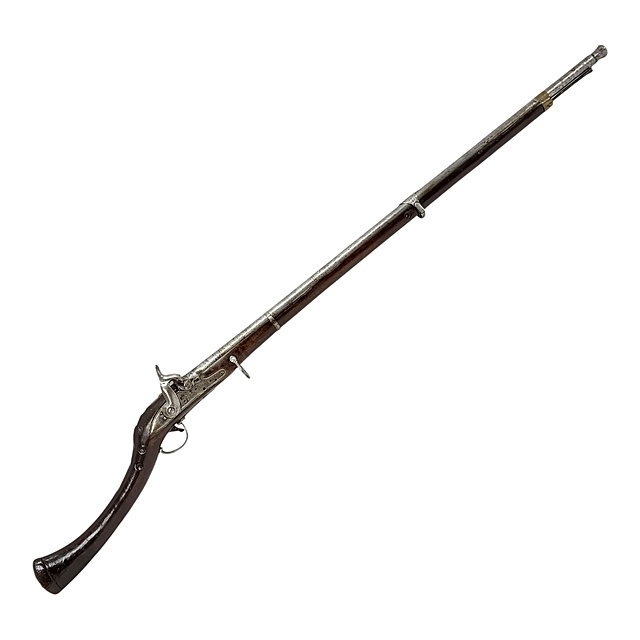
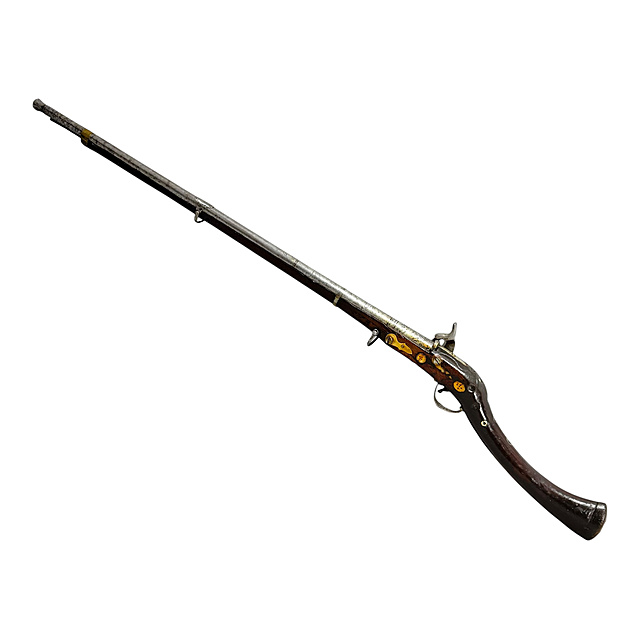
Flintlock gun jezail, India, converted, gold-coloured inlays, East India Company lock "1816"
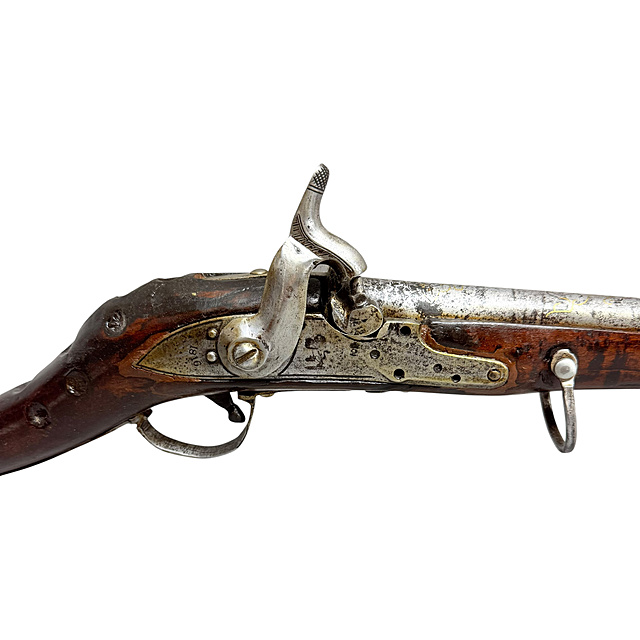
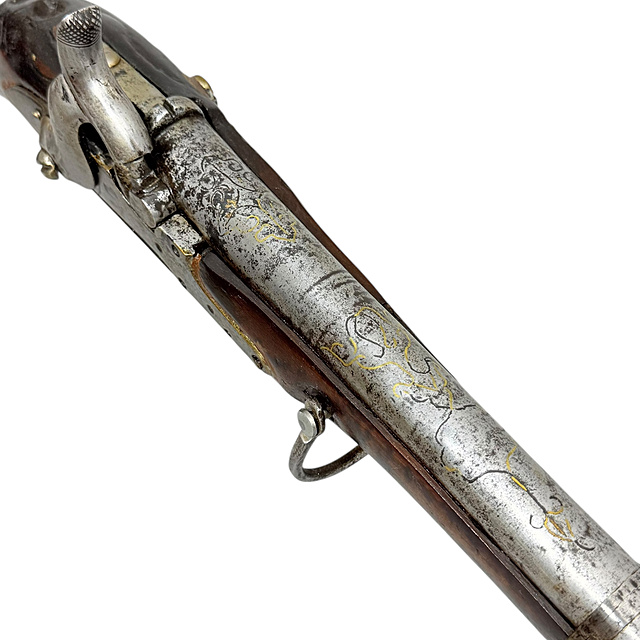
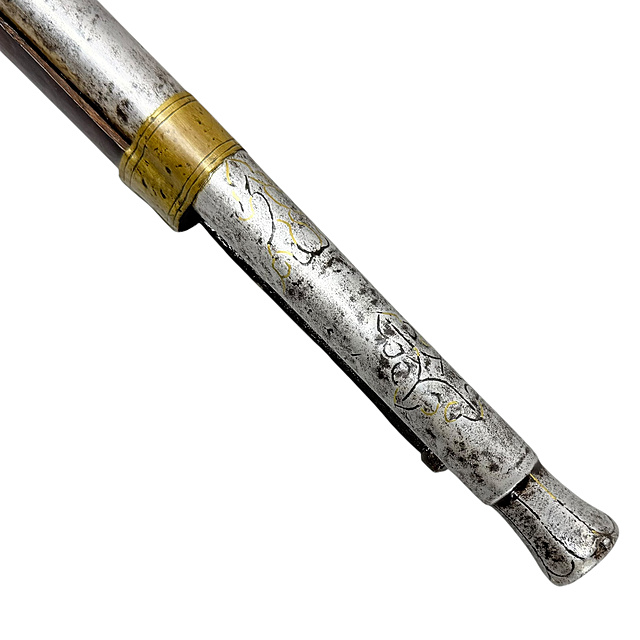
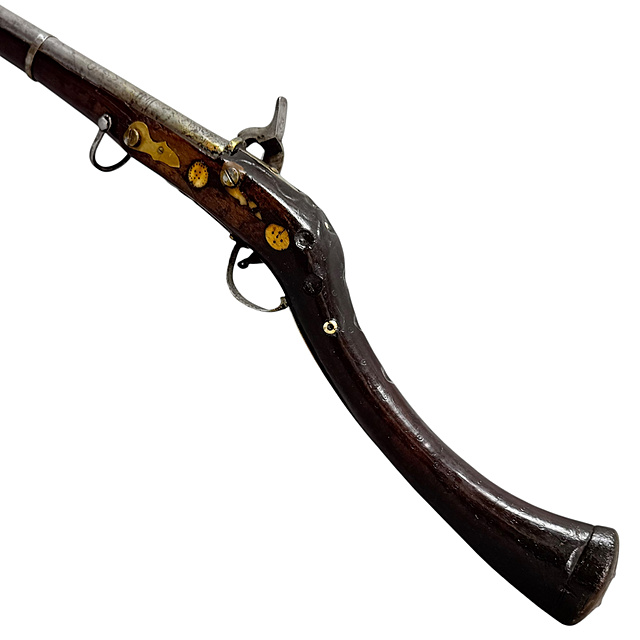
Iron and wood, jezail, flintlock gun, India, converted to percussion, calibre 15 mm, lock marked "1816". Long round barrel with gold-coloured inlaid scroll decoration at the breech and at the muzzle, muzzle with baluster-shaped swelling, full stock with one grooved brass-coloured barrel band, iron bands and sling swivels, ramrod beneath the barrel. Lock with flat lock plate tapering to a point at the rear, marked "1816", engraved in front of the hammer with the crowned lion rampant of the East India Company, beside it a crown over "2", hammer with ribbed thumbpiece, nipple in inserted bolster, brass-coloured stock mount in front of the lock, iron trigger guard, shaped brass-coloured side plate on the opposite side, beside it round bone inlays with dot decoration in the wood. Strongly curved, narrow butt with inset round metal discs. Mechanism works, age-appropriate condition, stock repaired around the lock, lock bedded in filler. L. 142 cm
The jezail is the long gun of Central Asia and British India, in the 19th century above all of the Pashtuns of Afghanistan, recognisable by its strongly curved butt, which was held at the shoulder or, when riding, close to the trigger. Many jezails received the locks of captured or broken British Brown Bess muskets, which came to the region in large numbers as surplus after the Napoleonic Wars. From 1808 the Honourable East India Company marked its locks with its heraldic beast, the crowned lion rampant, together with the year of manufacture and a crown over the number of the inspector. With a range of about 400 yards the jezail carried further than the Brown Bess, which earned it its reputation in the Anglo-Afghan Wars. The inserted bolster with nipple shows the conversion from flint to percussion ignition.


Lot
Limit:
Your maximum bid: €
by telephone
When bidding by telephone, you will automatically bid the limit or the registered pre-bid (telephone bidding is only possible from €100). Only when the limit/pre-bid has been reached we will call you to bid further on. Your telephone bid will be treated as a written bid up to the registered pre-bid and will of course only be used to the extent necessary.
If you save your absentee bids on the bid list, you will be able to change or delete them until you submit them. If you do not submit your absentee bids, they will not be considered. They must be submitted before the auction starts.
You can submit your absentee bids now using the "Submit absentee bids directly" button, or later using the "List of Bids" menu item.


