
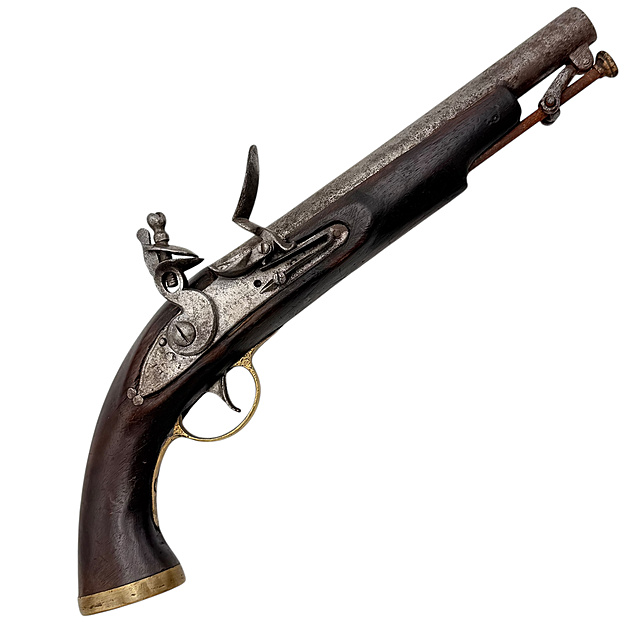
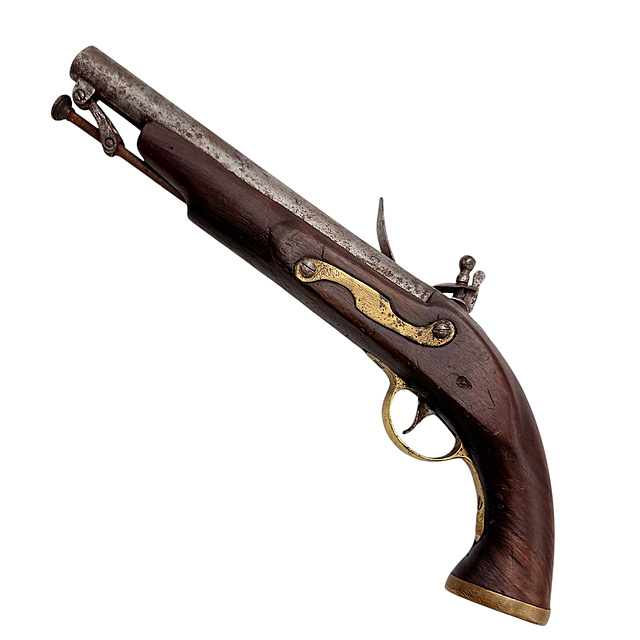
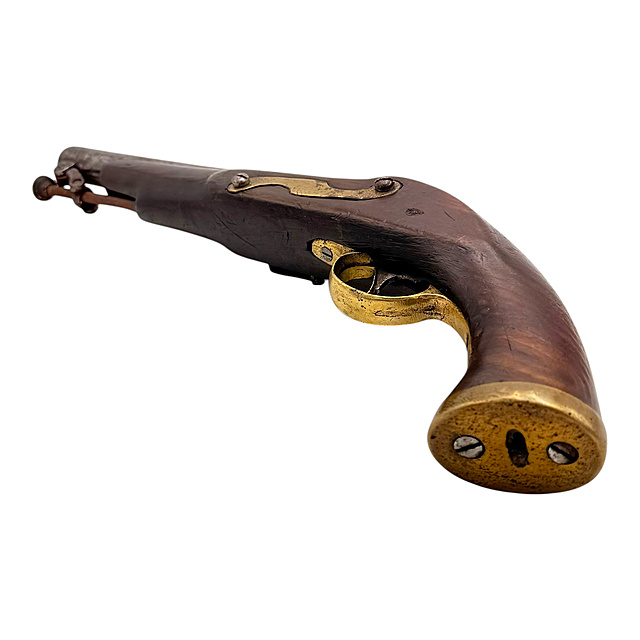
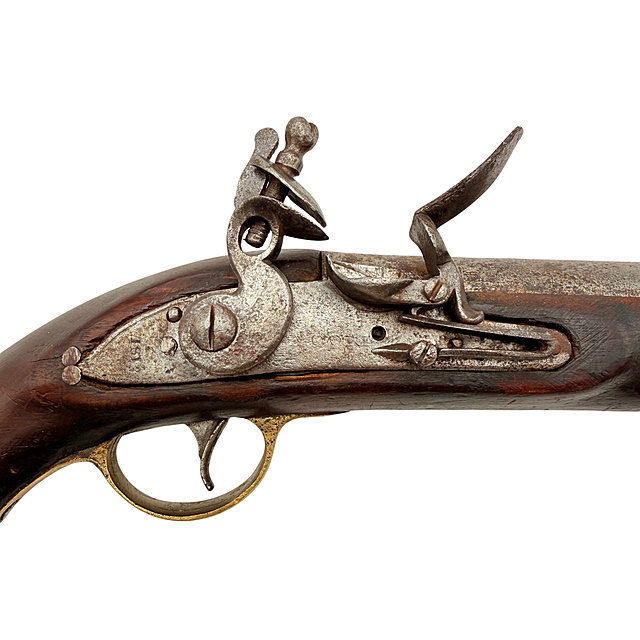
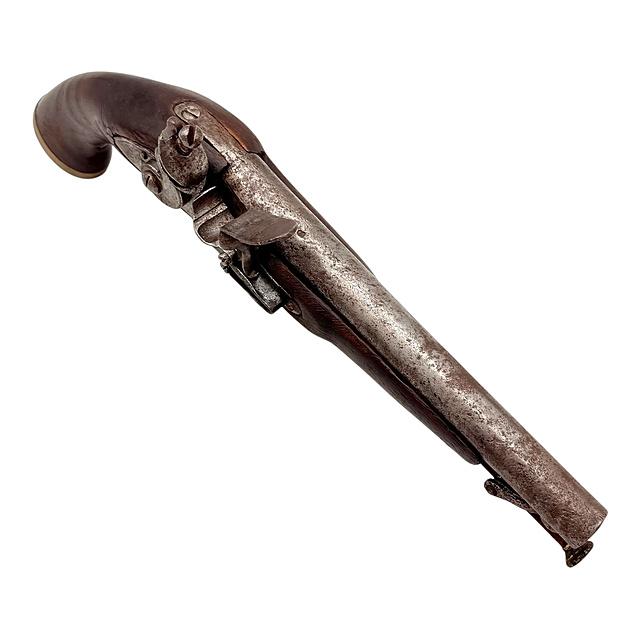
Flintlock pistol after the British New Land Pattern, probably East India Company, lock dated 1816
Flintlock pistol after the British New Land Pattern, probably made for the East India Company. Round iron barrel, calibre 17 mm, with a barely legible stamp, probably “J” or “5”, together with marks no longer identifiable. Lock with flat lock plate, ring-neck cock, raised pan and frizzen; on the tail of the lock plate the struck date “1816”; below the pan faintly legible marks, probably a crown, below it “1”, “OO” as well as “R” and probably “T”. Full stock of brown wood with replaced iron swivel ramrod, the joint at the muzzle end. The mounts of brass: trigger guard, S-shaped side plate and flat butt cap with two screws and the recess for the missing lanyard ring. Mechanism not functional, metal with pitted surface from age and use, the ramrod rusted, it slips out of its holder as the end cap is missing, the mainspring weakened. L. 38 cm.
The New Land Pattern was introduced for British service in 1802; the swivel ramrod and the raised, semi-waterproof pan were the technical innovations of this generation of pistols, while the .65 inch calibre of the preceding patterns was retained. The pistols of the East India Company, which maintained its own army in India, follow this pattern but differ in the flat butt cap with lanyard ring, which occurs only on this Company pattern; their locks bear a crowned numeral below the pan and the date on the tail of the lock plate. In the flintlock, the flint clamped in the cock strikes the frizzen, and the shower of sparks ignites the powder in the pan. As a flintlock weapon of a model predating 1871, the pistol is exempt from licensing under the German Weapons Act and may only be sold to persons aged 18 and over.


Lot
Limit:
Your maximum bid: €
by telephone
When bidding by telephone, you will automatically bid the limit or the registered pre-bid (telephone bidding is only possible from €100). Only when the limit/pre-bid has been reached we will call you to bid further on. Your telephone bid will be treated as a written bid up to the registered pre-bid and will of course only be used to the extent necessary.
If you save your absentee bids on the bid list, you will be able to change or delete them until you submit them. If you do not submit your absentee bids, they will not be considered. They must be submitted before the auction starts.
You can submit your absentee bids now using the "Submit absentee bids directly" button, or later using the "List of Bids" menu item.


