
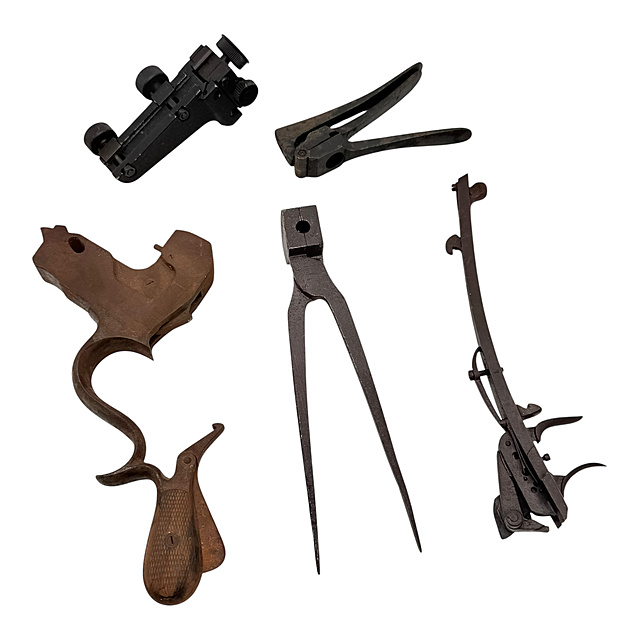
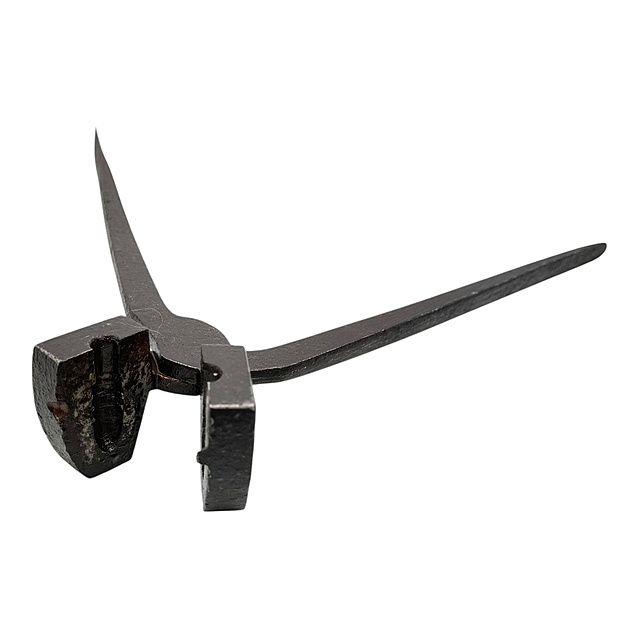
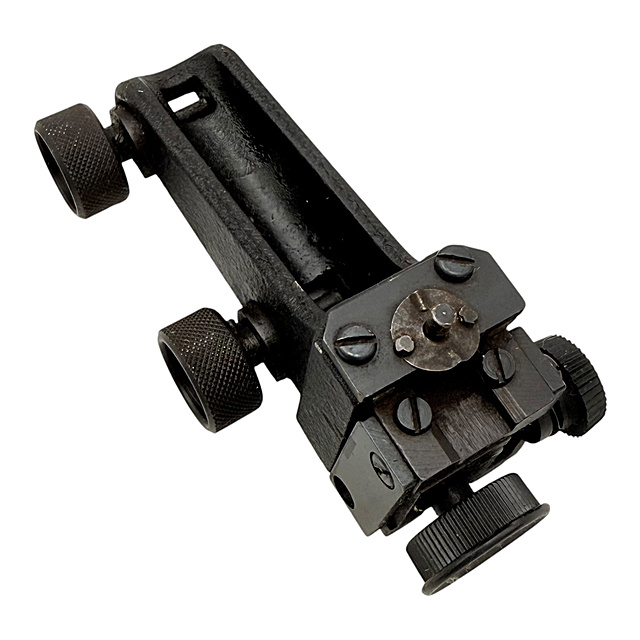
Lot of weapon spare parts, probably primer pliers, bullet mould, diopter sight, lock part, grip
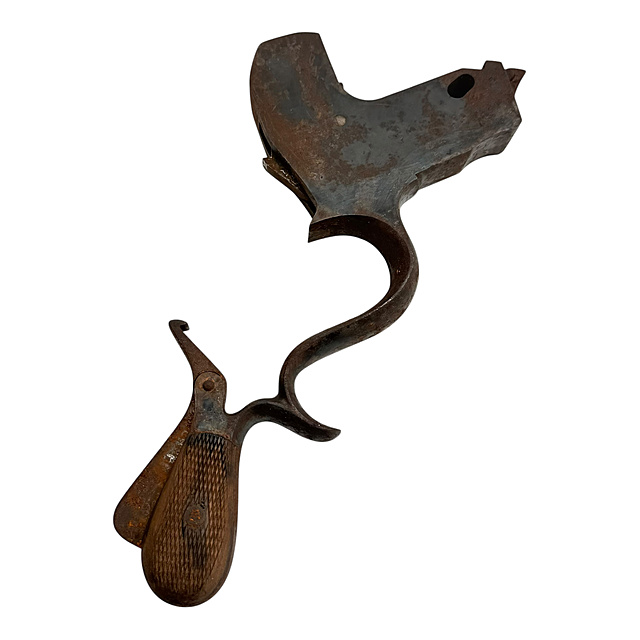
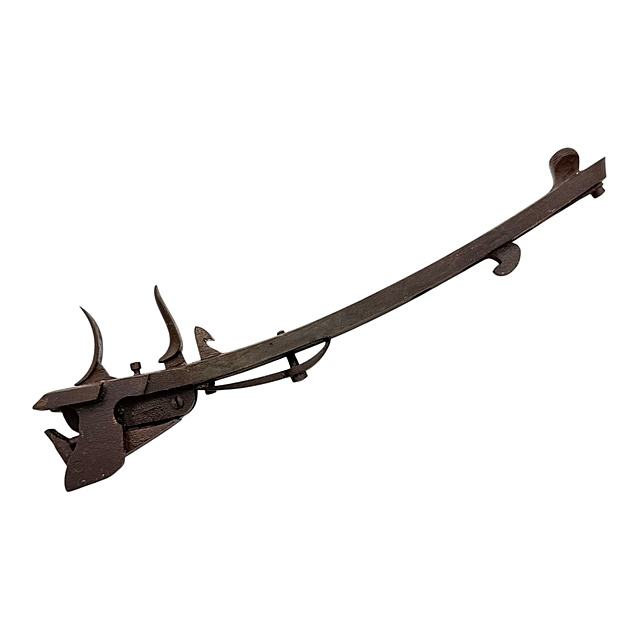
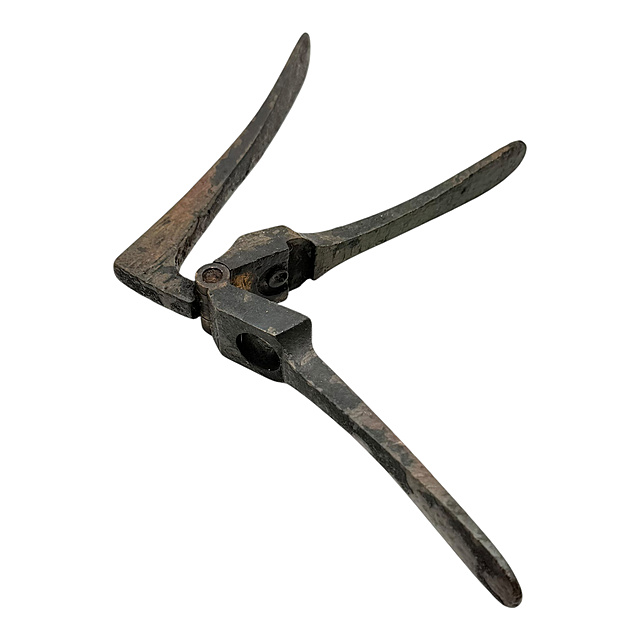
Metal and wood, lot of spare parts, five pieces: 1) probably primer pliers for reloading cartridge cases, two arms and central angled lever on the pivot pin, square-edged jaws, one with a round bore for the case, the other with a screw. 2) Bullet mould with elongated cavity for a grooved elongated bullet, long slender arms. 3) Diopter sight, black, mounting arm with two knurled clamping screws, adjustment block with two knurled adjusting wheels, at the top a disc with peg and two pins. 4) Lock mechanism, probably matchlock, with long curved spring arm with knob, plate with screws, clamping jaws with clamping screw and two curved spikes. 5) Grip frame of a pistol, probably target pistol, frame with bore, S-shaped curved trigger guard with finger spur, wooden grip panel with chequering and hinged lever with hook, with surface rust.
Primer pliers served marksmen around 1900 for loading their own ammunition: the cartridge case sits in the bore of the jaw, and the central lever moves a pin that removes the spent primer before a new one is inserted. Refilling cartridge cases was widespread among private individuals in the 19th and early 20th century for economic reasons. Bullet moulds are two-armed iron tools with cavities in their jaws, into which molten lead was poured to form bullets. With them the marksman supplied himself with ammunition for the muzzle-loader before the industrial production of cartridges. The diopter is the rear sighting device of a weapon: instead of the rear notch there is a plate adjustable for elevation and windage with a very small aperture, often also an iris diaphragm that can be adapted to different light conditions. In the matchlock a match holder, the so-called cock, held the smouldering match, which a lever connected to the trigger pressed onto the powder in the pan. In Europe this ignition was in use from the 14th to the 17th century; in Japan it remained in use for short and long arms until well into the 19th century.


Lot
Limit:
Your maximum bid: €
by telephone
When bidding by telephone, you will automatically bid the limit or the registered pre-bid (telephone bidding is only possible from €100). Only when the limit/pre-bid has been reached we will call you to bid further on. Your telephone bid will be treated as a written bid up to the registered pre-bid and will of course only be used to the extent necessary.
If you save your absentee bids on the bid list, you will be able to change or delete them until you submit them. If you do not submit your absentee bids, they will not be considered. They must be submitted before the auction starts.
You can submit your absentee bids now using the "Submit absentee bids directly" button, or later using the "List of Bids" menu item.


