
Percussion rifle, military version, walnut stock, cal. 18 mm, "8/12", probably 19th century
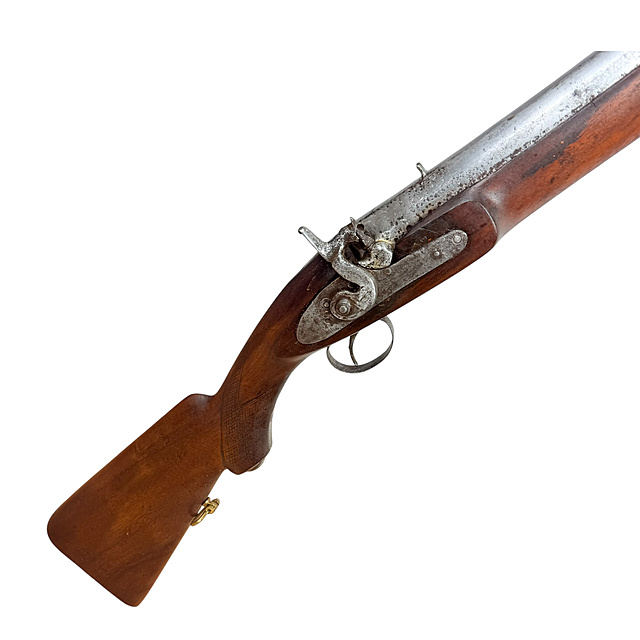
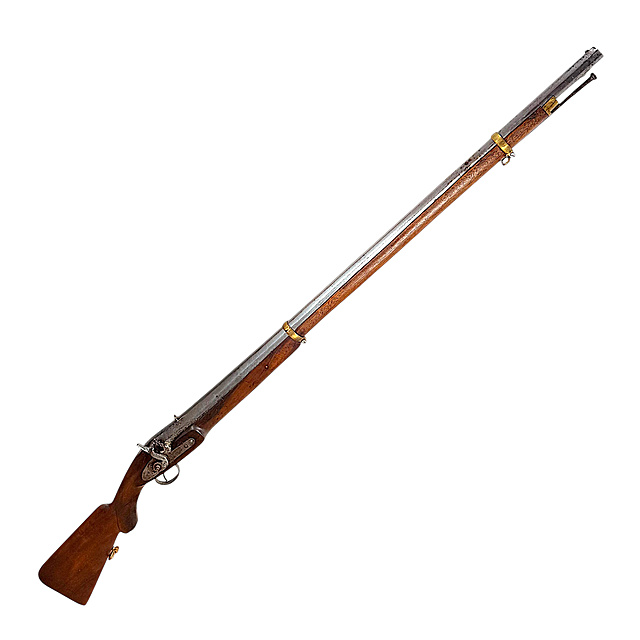
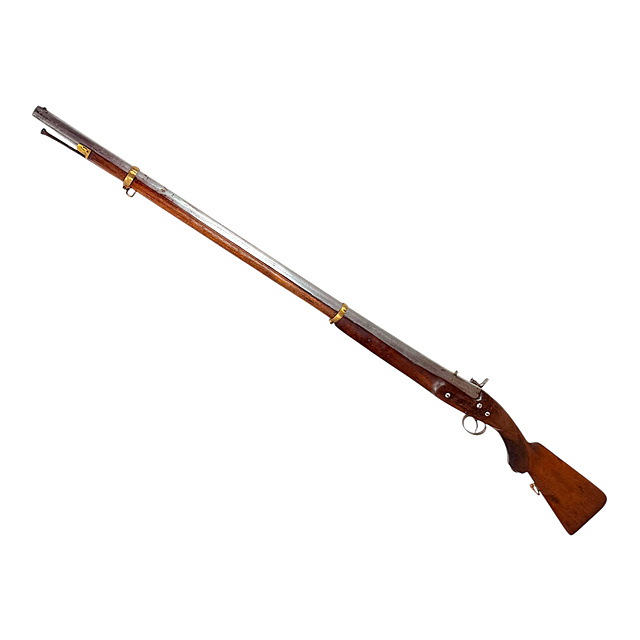
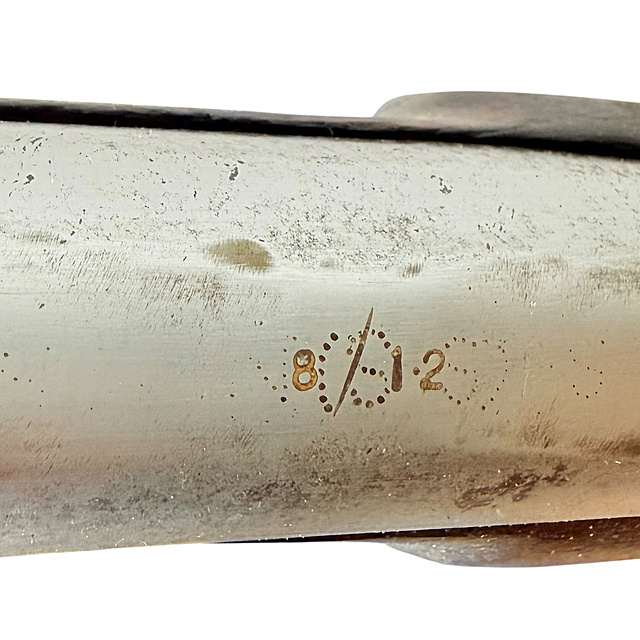
Iron and walnut, fully stocked percussion rifle, military version, muzzleloader, probably 19th century, calibre 18 mm. Round barrel with front sight, on top of the barrel at the breech the stamped number "8/12" between dotted circle ornaments, full walnut stock up to the brass-coloured forend cap, two brass-coloured barrel bands, sling swivel on the front band, iron ramrod with trumpet-shaped head beneath the barrel. Percussion lock with flat lock plate rounded at the rear, hammer with curved thumb spur, nipple, iron wire trigger guard, chequered wrist, second sling swivel on the butt. Used condition commensurate with age, mechanism not working, a piece broken off at the front of the hammer, rear part of the barrel pitted with rust. L. 139.5 cm
The percussion lock goes back to the ignition with shock-sensitive priming powder patented by Alexander John Forsyth in 1807, and the percussion cap was added in the late 1810s: the hammer strikes a percussion cap on the nipple, whose spark ignites the charge in the barrel. This eliminated the flint and frizzen of the flintlock and made ignition more weather-resistant. From the middle of the 19th century, breechloaders such as the needle gun and the Chassepot rifle displaced percussion muzzleloaders from the armies. The present rifle with barrel bands and sling swivels follows the design of the military muzzleloaders of this period.


Lot
Limit:
Your maximum bid: €
by telephone
When bidding by telephone, you will automatically bid the limit or the registered pre-bid (telephone bidding is only possible from €100). Only when the limit/pre-bid has been reached we will call you to bid further on. Your telephone bid will be treated as a written bid up to the registered pre-bid and will of course only be used to the extent necessary.
If you save your absentee bids on the bid list, you will be able to change or delete them until you submit them. If you do not submit your absentee bids, they will not be considered. They must be submitted before the auction starts.
You can submit your absentee bids now using the "Submit absentee bids directly" button, or later using the "List of Bids" menu item.


