
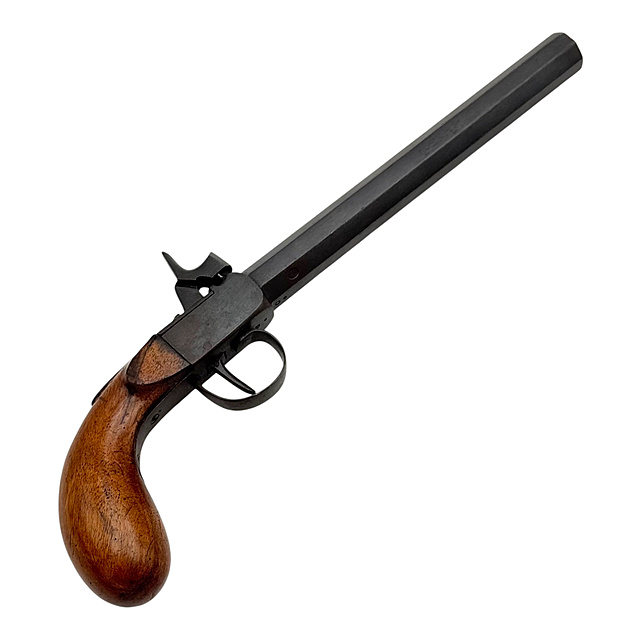
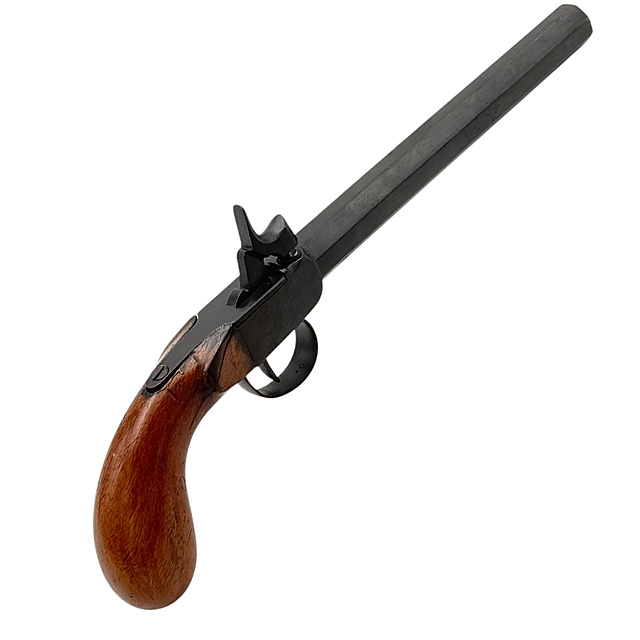
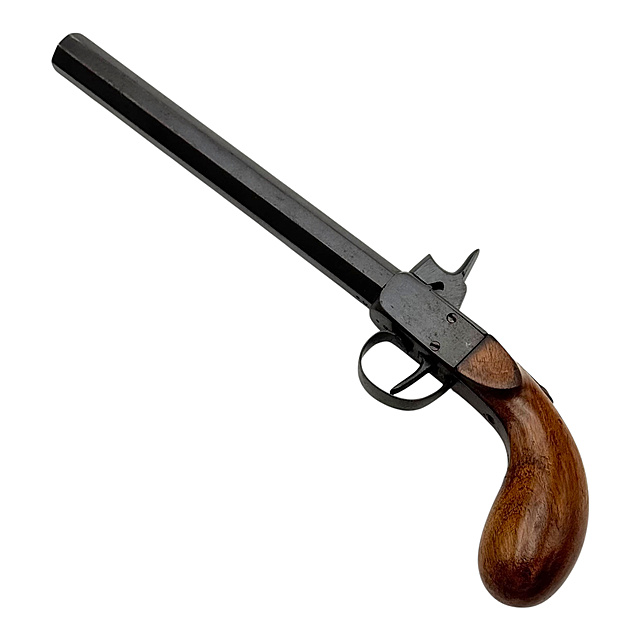
Percussion box-lock terzerol, so-called vineyard pistol, probably Saint-Étienne, circa 1860
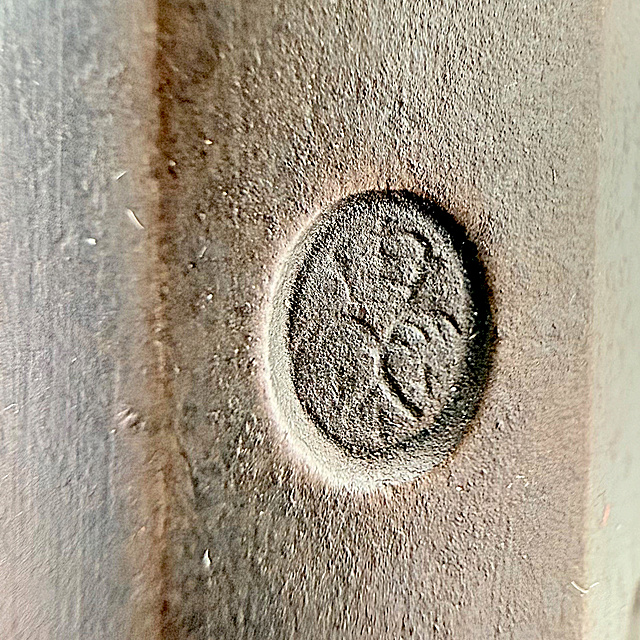
Percussion pistol of terzerol type, called a vineyard pistol in collectors’ jargon. Long, dark patinated octagonal barrel with smooth bore, calibre 13 mm; box lock with the hammer sitting centrally on the lock box, without side lock plate; iron trigger guard. The bulbous wooden butt is made without butt cap and fixed to the lock box with a screw. On the barrel a heavily rubbed upright oval mark with crown above two crossed palm branches and three small crosses, probably the proof mark of Saint-Étienne. Age-appropriate condition, metal parts partly pitted and stained, the wood with scratches and dents, mechanism functional. L. 28 cm
Terzerols are small handguns with box lock, in which the hammer sits centrally on the lock box and there is no side lock plate. The sturdily built, long-barrelled pieces were used in the 19th century to scare flocks of birds out of vineyards and orchards and are therefore called vineyard pistols. They survive in a great variety of forms and can usually not be attributed to a specific workshop. The proof house of Saint-Étienne used crossed palm branches, the symbol of the martyr Stephen as patron saint of the city, in its stamp; one version of this official mark was in use from 1856 to 1869. The pistol is a muzzle-loader with percussion ignition based on a model predating 1871. Under German weapons law, it may be acquired without a licence from the age of 18.


Lot
Limit:
Your maximum bid: €
by telephone
When bidding by telephone, you will automatically bid the limit or the registered pre-bid (telephone bidding is only possible from €100). Only when the limit/pre-bid has been reached we will call you to bid further on. Your telephone bid will be treated as a written bid up to the registered pre-bid and will of course only be used to the extent necessary.
If you save your absentee bids on the bid list, you will be able to change or delete them until you submit them. If you do not submit your absentee bids, they will not be considered. They must be submitted before the auction starts.
You can submit your absentee bids now using the "Submit absentee bids directly" button, or later using the "List of Bids" menu item.


