
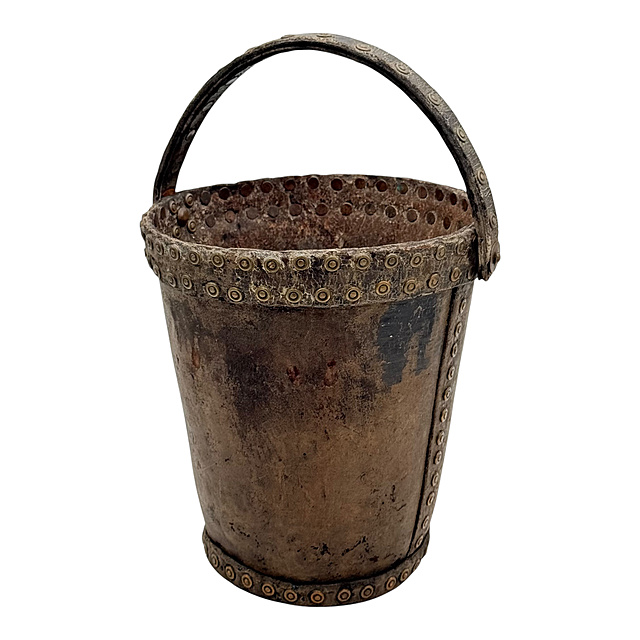
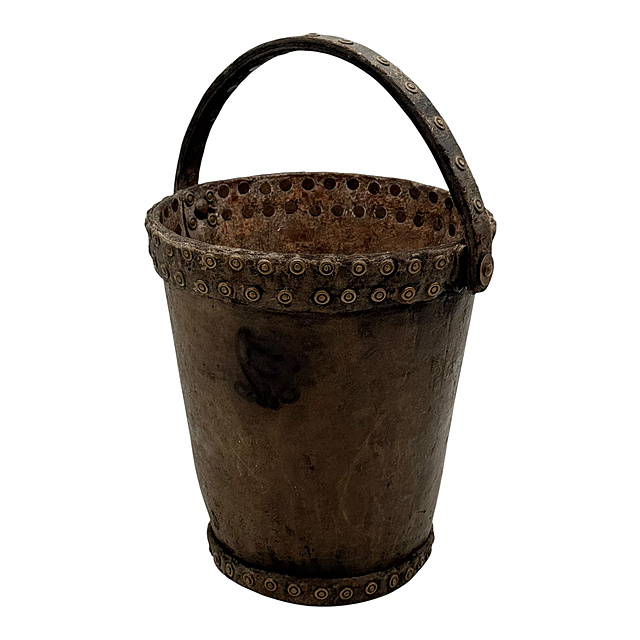
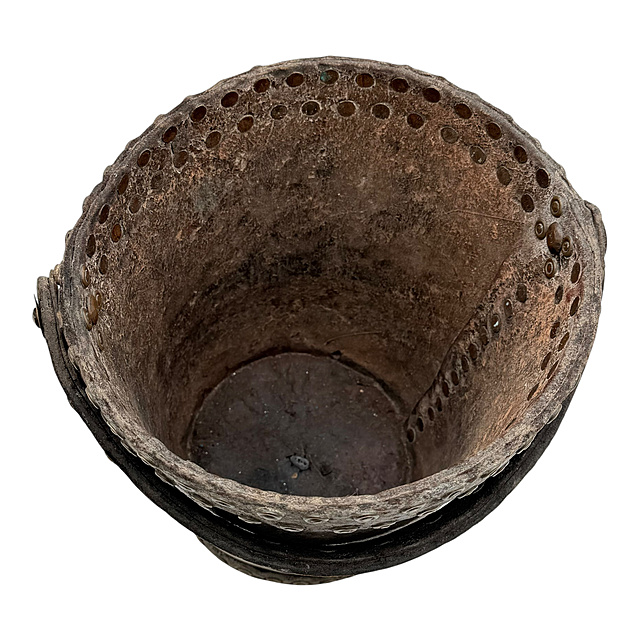
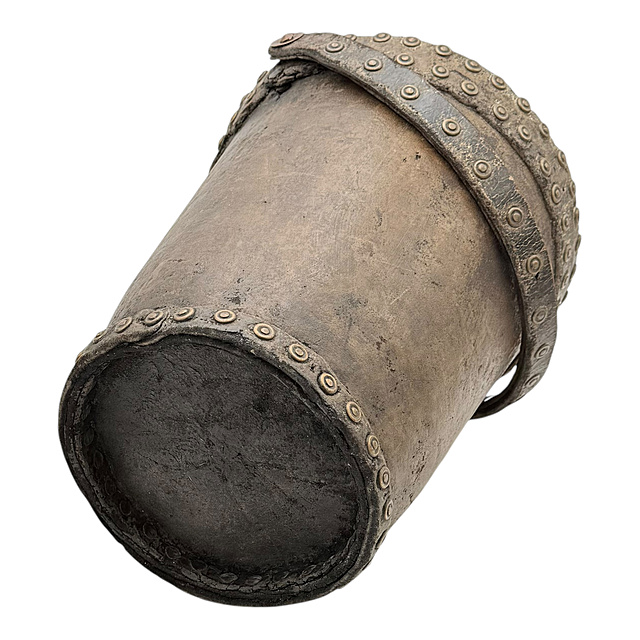
Leather bucket, probably fire bucket, with brand stamp, brass-coloured rivets and carrying handle
Leather and metal. Bucket, probably fire bucket, of conical form, the vertical side seam covered with a riveted-on strip, inset base, at the bottom a riveted foot ring running all around. Wide rim reinforcement with two encircling rows of brass-coloured rivets with washers. Carrying handle of riveted multi-layer straps, attached on each side at the rim with a large round-head rivet. On the wall below the rim a dark, illegible brand stamp. Good condition commensurate with age. H. 30 cm, top D. 24 cm.
Leather extinguishing buckets, also called fire buckets, were among the tools of firefighting from the 17th century at the latest; the vegetable-tanned leather was sealed with pitch, wax and oil. Regulations determined who had to keep such buckets and where they were to be stored. In the Palatinate, according to ordinances of 1772, every householder had to keep a leather fire bucket bearing his name ready, and anyone who wished to marry or to be accepted as a subject had to supply the community buckets with a new bucket marked with the year and name. In case of fire, neighbours passed the filled buckets along a bucket chain from the water to the fire until the fire brigade arrived with its hand pumps. Because the leather buckets passed through many hands, they bore the name, initials or place of residence of the owner or the location of the fire brigade, so that each piece could be quickly assigned after the fire was put out. With the spread of fire extinguishers, the fire bucket lost its importance.


Lot
Limit:
Your maximum bid: €
by telephone
When bidding by telephone, you will automatically bid the limit or the registered pre-bid (telephone bidding is only possible from €100). Only when the limit/pre-bid has been reached we will call you to bid further on. Your telephone bid will be treated as a written bid up to the registered pre-bid and will of course only be used to the extent necessary.
If you save your absentee bids on the bid list, you will be able to change or delete them until you submit them. If you do not submit your absentee bids, they will not be considered. They must be submitted before the auction starts.
You can submit your absentee bids now using the "Submit absentee bids directly" button, or later using the "List of Bids" menu item.


