
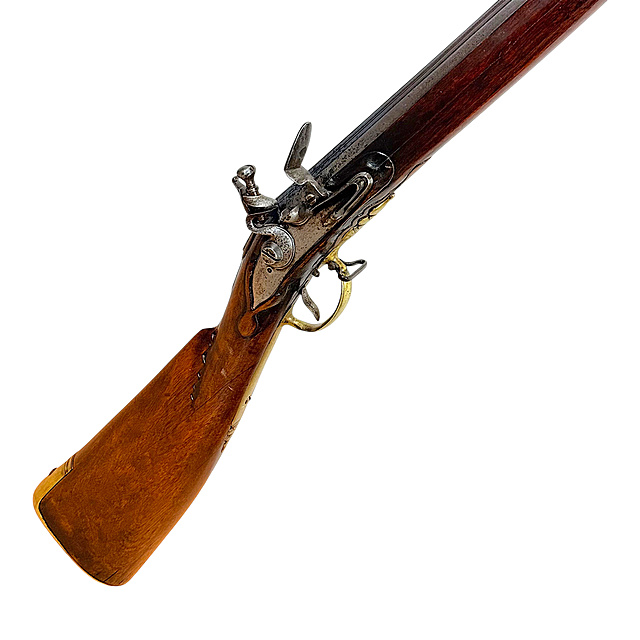
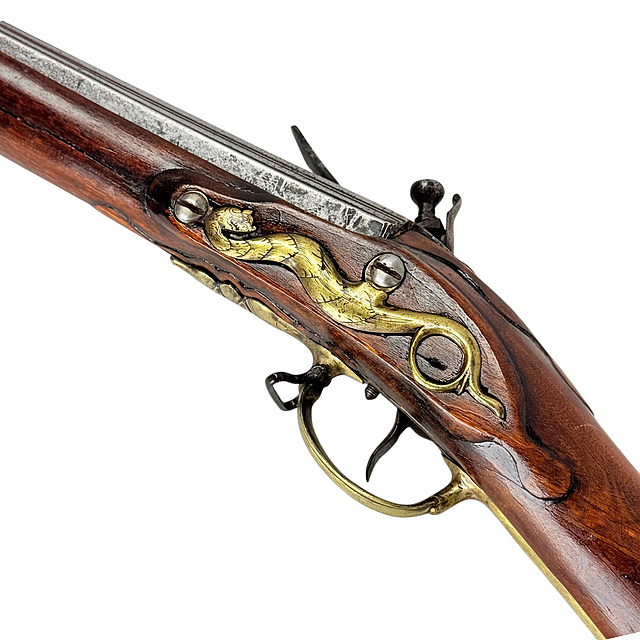
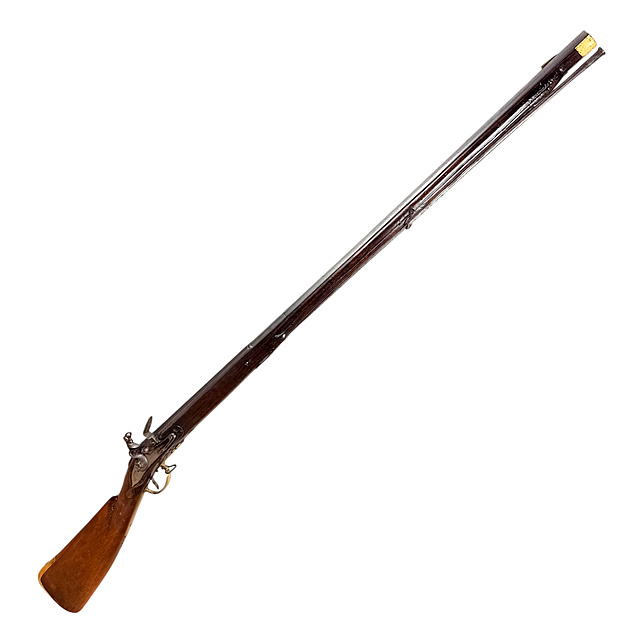
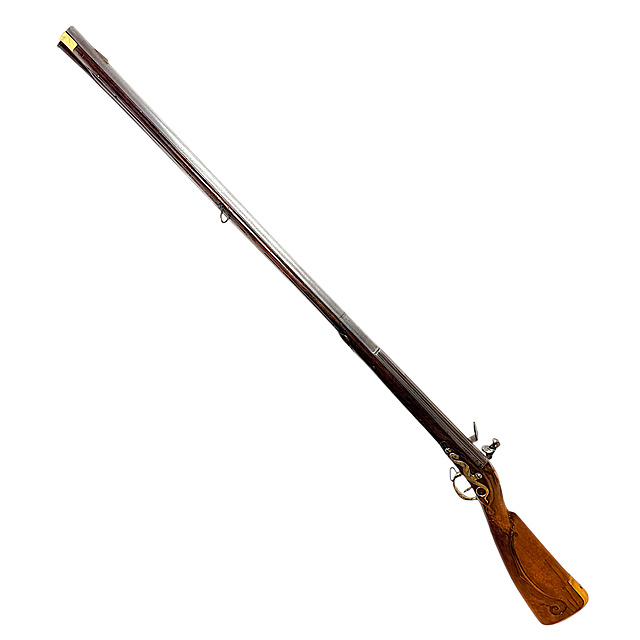
Flintlock rifle circa 1760, carved stock, brass mounts, dragon-shaped side plate
Iron, wood, brass and bone, flintlock rifle, muzzleloader, circa 1760. Long round barrel, fluted with longitudinal grooves at the breech, full stock with bone forend cap, ramrod beneath the barrel, sling swivel on the forend. Flintlock (battery lock) with lock plate tapering to a point at the rear, cock with flint jaws, frizzen with frizzen spring and pan, the stock with a frame and scrollwork carved in relief around the lock and tang screw, wrist with carved rocaille, on the opposite side figural brass side plate in the form of a dragon, held by two lock screws, brass trigger guard, brass butt plate, butt with carved scroll decoration. Mechanism working, cracks on the wrist. L. 130 cm
The flintlock, also called the battery lock, replaced the snaphance lock in Europe circa 1680 and remained the prevalent ignition system of firearms into the early 19th century: the flint in the cock strikes the steel frizzen, and the sparks ignite the priming powder in the pan. Only the percussion ignition with shock-sensitive priming powder patented by Alexander John Forsyth in 1807, used with percussion caps from the late 1810s, superseded it. The side plate on the side opposite the lock receives the lock screws; here it is worked as a dragon instead of as a curved plate. The carving with framework around the lock and rocaille on the wrist makes this rifle a muzzleloader with an elaborately decorated stock.


Lot
Limit:
Your maximum bid: €
by telephone
When bidding by telephone, you will automatically bid the limit or the registered pre-bid (telephone bidding is only possible from €100). Only when the limit/pre-bid has been reached we will call you to bid further on. Your telephone bid will be treated as a written bid up to the registered pre-bid and will of course only be used to the extent necessary.
If you save your absentee bids on the bid list, you will be able to change or delete them until you submit them. If you do not submit your absentee bids, they will not be considered. They must be submitted before the auction starts.
You can submit your absentee bids now using the "Submit absentee bids directly" button, or later using the "List of Bids" menu item.


