
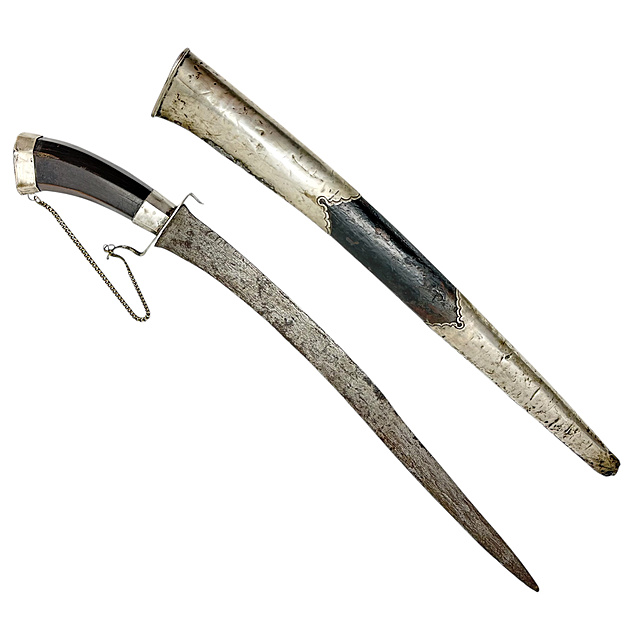
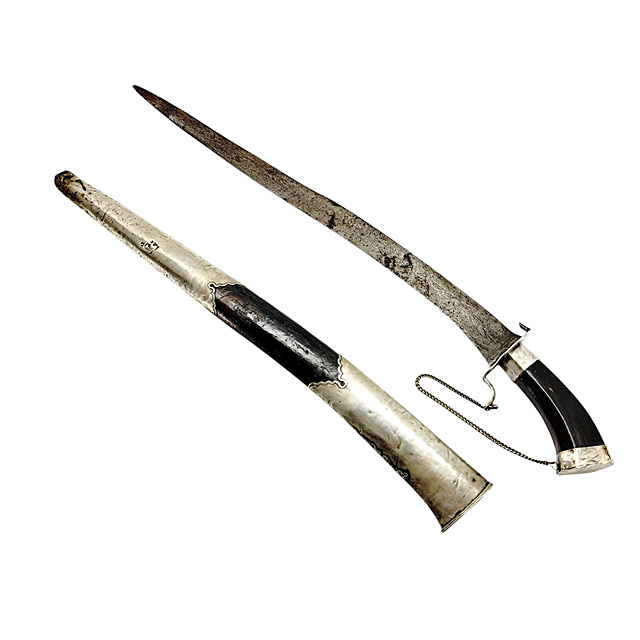
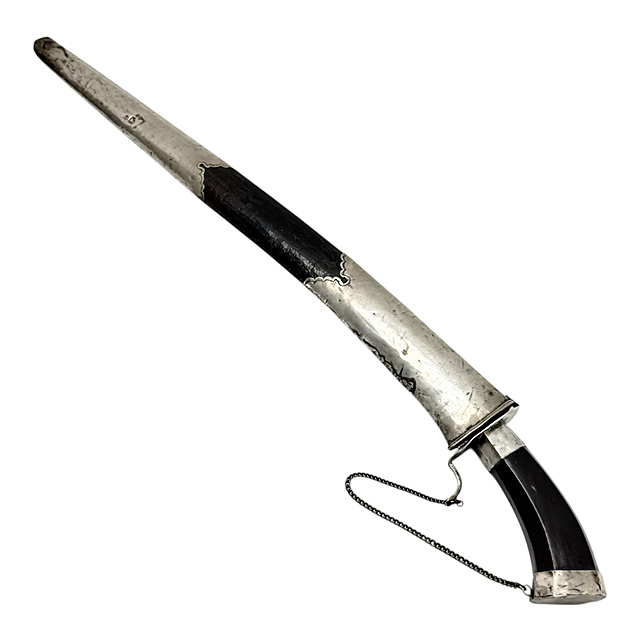
Indonesian Kris with Silver Heft, Snake Cross-Guard, Damascus Blade and Wooden Scabbard
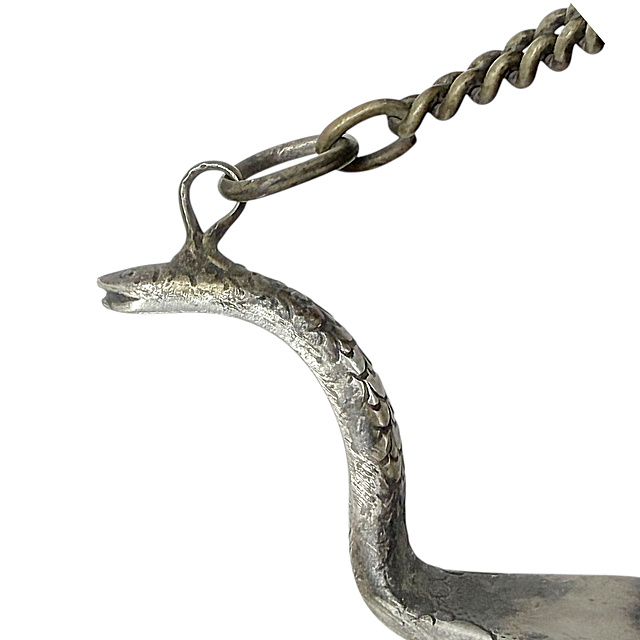
Steel, silver, wood and lacquer. Slightly curved, single-edged Damascus blade with heavily weathered pamor patterning. Wooden grip with silver heft and presumably silver-plated fittings at the pommel, cross-guard in the form of a snake, a fine security chain attached to its head. Wooden scabbard with presumably silver-plated fittings at throat and chape, the central section finished in black lacquer, only partially preserved. An old solder repair in the upper section of the scabbard. The blade with even age patina and signs of use, the silver and presumably silver-plated fittings with slight oxidation and wear marks. Overall length 59 cm, blade length 46 cm.
The kris is a traditional stabbing and cutting weapon of the Indonesian archipelago, documented since the 10th century. UNESCO proclaimed the Indonesian kris a Masterpiece of the Oral and Intangible Heritage of Humanity in 2005 and inscribed it on the Representative List of Intangible Cultural Heritage in 2008. The characteristic pamor pattern of the blade is created by forge-welding different iron ores with meteoritic nickel in an elaborate forging process carried out by master smiths (Empu). Silver-mounted examples indicate the high social rank of the former owner. The snake-shaped cross-guard (mendak) is a recurring motif in Indonesian kris culture and carries symbolic significance.


Lot
Limit:
Your maximum bid: €
by telephone
When bidding by telephone, you will automatically bid the limit or the registered pre-bid (telephone bidding is only possible from €100). Only when the limit/pre-bid has been reached we will call you to bid further on. Your telephone bid will be treated as a written bid up to the registered pre-bid and will of course only be used to the extent necessary.
If you save your absentee bids on the bid list, you will be able to change or delete them until you submit them. If you do not submit your absentee bids, they will not be considered. They must be submitted before the auction starts.
You can submit your absentee bids now using the "Submit absentee bids directly" button, or later using the "List of Bids" menu item.


